
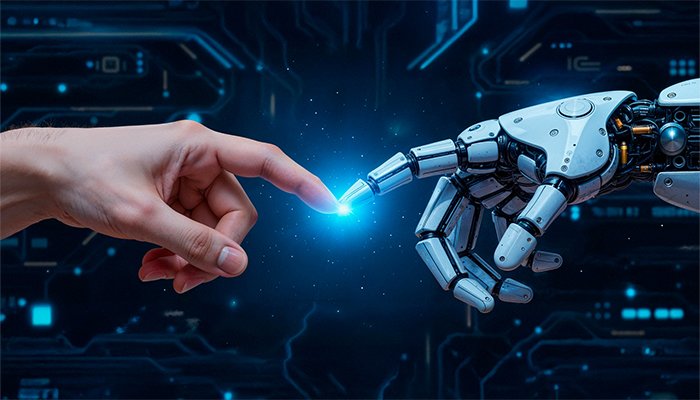
In today’s digital-first world, data has become the lifeblood of every organization. From small businesses to global enterprises, digital transformation has unlocked new levels of efficiency, productivity, and connectivity. However, this evolution has also opened the door to new and increasingly sophisticated cyber threats. As hackers employ more advanced tools and tactics, traditional cybersecurity systems often struggle to keep up. This is where Artificial Intelligence (AI) is stepping in as a game-changer—revolutionizing how we detect, prevent, and respond to cyberattacks.
Artificial Intelligence, with its ability to analyze vast amounts of data, identify hidden patterns, and make intelligent decisions, is redefining the future of cybersecurity. It’s no longer just a tool—it’s an intelligent defender that learns, adapts, and evolves faster than cybercriminals.
Understanding the Cybersecurity Landscape
Before exploring how AI is transforming cybersecurity, it’s important to understand the challenge at hand. Cyber threats have become more complex, frequent, and damaging. According to global reports, cybercrime costs the world economy over $10 trillion annually, and this number is expected to rise. Traditional defense mechanisms like firewalls, antivirus software, and manual monitoring are no longer sufficient to detect the vast range of evolving threats such as ransomware, phishing, malware, and zero-day attacks.
The problem is scale and speed. Cybercriminals use automation and AI-driven attacks to target organizations around the clock. Human analysts, though skilled, simply can’t analyze millions of data points in real time. This imbalance has created an urgent need for smarter, faster, and more adaptive security systems—and that’s exactly what Artificial Intelligence brings to the table.
What Role Does AI Play in Cybersecurity?
AI in cybersecurity refers to the use of machine learning (ML), deep learning, and data analytics to automate threat detection, prevention, and response. By learning from historical data and continuously adapting to new information, AI-driven systems can predict attacks before they happen, identify suspicious activity in real time, and respond faster than any human team could.
In simple terms, AI turns reactive security into proactive defense.
Here are the major areas where AI is making an impact:
1. Threat Detection and Prediction
Traditional security systems often rely on predefined rules or signatures to detect malware or intrusions. However, attackers now create new variants of malware that easily bypass these static defenses. AI-powered systems, on the other hand, analyze huge volumes of data—including user behavior, network traffic, and system logs—to detect anomalies.
Machine learning models can identify subtle deviations from normal activity, flagging potential threats even when they don’t match known attack patterns. For example, if an employee’s account suddenly downloads massive amounts of data at an unusual hour, AI can instantly recognize the abnormal behavior and alert administrators.
Moreover, predictive analytics allows AI to forecast potential vulnerabilities before they are exploited. By studying trends in global attack data, AI can predict what type of cyber threats are likely to emerge next, enabling security teams to prepare in advance.
2. Automated Incident Response
One of the biggest challenges in cybersecurity is response time. When an attack occurs, every second counts. AI enables automated incident response systems that can take immediate action the moment a threat is detected.
For example, if a ransomware attack is detected, AI can automatically isolate affected devices from the network, stop data transfers, and launch recovery processes—sometimes within milliseconds. This not only limits the damage but also gives human analysts the time and data needed to investigate further.
AI-driven response tools such as Security Orchestration, Automation, and Response (SOAR) platforms have become essential for modern security operations centers (SOCs). These tools combine automation with intelligent decision-making, helping teams respond to threats efficiently and consistently.
3. Enhanced Network Security and Traffic Monitoring
AI is exceptionally good at pattern recognition, making it ideal for monitoring network traffic. It can continuously learn what normal network behavior looks like and immediately flag anything unusual—such as unexpected data flows or unauthorized access attempts.
AI-based systems can even identify zero-day vulnerabilities, which are new and previously unknown security flaws. By using deep learning algorithms, these systems can detect the early signs of an exploit attempt, even if no signature or patch exists yet. This capability dramatically improves the resilience of networks against emerging threats.
4. Strengthening Authentication and Access Control
One of the most common entry points for cybercriminals is weak or stolen passwords. AI enhances authentication systems through behavioral biometrics and adaptive authentication. Instead of relying solely on passwords, AI analyzes factors like typing speed, device usage, and login location to determine whether the user is legitimate.
For instance, if someone tries to log into a corporate account from a new country at an unusual hour, the AI system can automatically request additional verification or temporarily block access. This makes identity and access management far more secure and dynamic.
Facial recognition and voice authentication systems also use AI to ensure that only authorized users can access sensitive data—reducing the risk of identity theft and insider threats.
5. Phishing and Social Engineering Defense
Phishing attacks have evolved significantly, with cybercriminals using AI-generated emails and deepfake content to deceive users. Fortunately, AI can counter these attacks with equal intelligence.
AI-powered email filters use natural language processing (NLP) and pattern recognition to identify suspicious language, malicious links, and fake sender addresses. These systems learn from real phishing attempts to continuously improve their detection accuracy.
Some advanced platforms even use AI chatbots to test employees by sending simulated phishing messages, helping organizations identify weaknesses in their security awareness programs and train staff effectively.
6. Malware Analysis and Prevention
Malware detection used to depend on databases of known virus signatures, which had to be updated constantly. AI changes this approach entirely. Instead of matching malware against known patterns, AI examines its behavior.
Machine learning algorithms analyze how a file or application behaves when executed—such as what processes it accesses, what files it modifies, and whether it tries to connect to external servers. Even if the malware is new and has no signature, its unusual behavior can instantly alert the system.
This approach makes AI-powered antivirus and endpoint protection tools significantly more effective against unknown or evolving malware strains.
7. Security Analytics and Risk Management
AI doesn’t just detect threats—it helps organizations understand and prioritize them. With so much security data generated daily, analysts can easily get overwhelmed by alerts. AI filters through massive amounts of information, highlights the most critical risks, and provides actionable insights.
This capability transforms cybersecurity from a reactive process into a strategic decision-making tool. Organizations can use AI-based analytics to identify vulnerable systems, predict the potential impact of threats, and allocate resources more efficiently.
The Advantages of AI in Cybersecurity
The integration of Artificial Intelligence into cybersecurity brings numerous advantages:
-
Speed and Efficiency: AI can process millions of data points and identify threats in real time.
-
Accuracy: With machine learning, false positives are reduced, and true threats are detected faster.
-
Automation: Routine tasks like log analysis, patch management, and incident response can be fully automated.
-
Predictive Power: AI doesn’t just react—it anticipates and prevents future attacks.
-
Scalability: AI systems can handle growing data volumes without additional manpower.
-
24/7 Protection: Unlike human teams, AI operates around the clock without fatigue.
In short, AI acts as both shield and strategist—protecting systems while continuously improving itself through experience.
Challenges and Limitations of AI in Cybersecurity
Despite its promise, AI is not a silver bullet. It comes with its own set of challenges:
-
Adversarial AI Attacks: Cybercriminals can manipulate AI models by feeding them false data, tricking them into ignoring real threats or misclassifying harmless activity as malicious.
-
Data Privacy Concerns: AI requires access to large amounts of data for training. This raises privacy and compliance issues, especially with regulations like GDPR.
-
Cost and Complexity: Implementing AI-driven systems can be expensive, requiring skilled professionals and strong infrastructure.
-
False Positives: Although reduced, false alarms still occur, sometimes leading to unnecessary disruptions.
-
Dependency Risk: Over-reliance on AI without human oversight can be dangerous if the system behaves unpredictably.
To overcome these challenges, organizations must adopt a hybrid approach, combining AI efficiency with human intelligence and ethical governance.
The Future of AI in Cybersecurity
The future of cybersecurity lies in AI-driven automation and adaptive intelligence. As cyber threats become more automated and sophisticated, defense mechanisms must evolve at the same pace. Emerging trends like Quantum AI, self-healing networks, and neural network–based security systems promise even greater resilience and predictive power.
AI will also play a crucial role in securing the Internet of Things (IoT), where billions of interconnected devices create new entry points for attackers. Through continuous learning and cross-network intelligence, AI can provide real-time protection across complex digital ecosystems.
Furthermore, the rise of Generative AI will push both sides—attackers and defenders—to innovate. While hackers may use generative models to create fake content or malware, cybersecurity experts will counter with smarter AI models capable of identifying such manipulations instantly.
The collaboration between human expertise and AI intelligence will shape the next generation of cyber defense—proactive, adaptive, and resilient.